Buy e-mediate.eu ?
We are moving the project
e-mediate.eu .
Are you interested in purchasing the domain
e-mediate.eu ?
domain@kv-gmbh.de · 0541-91531010
Buy e-mediate.eu ?
What does rationalism mean?
Rationalism is a philosophical belief that emphasizes the role of reason and logic in understanding the world. It holds that knowledge is primarily derived from reason and intellectual processes, rather than from sensory experience or religious faith. Rationalists believe that certain truths can be known a priori, or independently of experience, through the use of reason. This approach to knowledge contrasts with empiricism, which emphasizes the importance of sensory experience in acquiring knowledge. **
What is critical rationalism?
Critical rationalism is a philosophical approach that emphasizes the importance of critical thinking and skepticism in the pursuit of knowledge. It was developed by philosopher Karl Popper and is based on the idea that knowledge can never be fully justified or proven, but can only be tested and criticized. Critical rationalism encourages the constant questioning and testing of theories and beliefs, and rejects the notion of absolute truth. It also emphasizes the importance of openness to new ideas and the willingness to revise or abandon theories in the face of new evidence. **

Similar search terms for Rationalism
Top-Angebote
Products related to Rationalism:
-
HARPERCOLLINS Creative Confidence by Tom & David Kelley – Unleashing Your Creative Potential & Innovation MindsetA powerful and inspiring book from the founders of IDEO, the award-winning design firm, on unleashing the creativity that lies within each and every one of us. Too often, companies and individuals assume that creativity and innovation are the domain of the ‘creative types’. But two of the foremost experts in innovation, design and creativity on the planet show us that each and every one of us is creative. In an entertaining and inspiring narrative that draws on countless stories from their work at IDEO, and with many of the world's top companies and design firms, David and Tom Kelley identify the principles and strategies that will allow us to tap into our creative potential in our work lives, and in our personal lives, allow us to think outside the box in terms of how we approach and solve problems. ‘Creative Confidence’ is a book that will help each of us be more productive and successful in our lives and in our careers.4,95 £*Shipping: 1,99 £Secure redirect to the provider
-
Yealink MeetingBoard 65-inch 4K Interactive Collaboration Display (MB65-A001)Yealink MeetingBoard 65 (MB65-A001): a 65-inch 4K Ultra HD LED-backlit interactive touch display for meeting rooms, with built-in camera, microphone array and speakers for Microsoft Teams Rooms and Zoom Rooms. Runs Android with a built-in processor and Wi-Fi.3896,99 £*Shipping: 0,00 £Secure redirect to the provider
-
Dell Pro Silent Wired Collaboration Keyboard KB525C UK QWERTY - BlackProfessional wired collaboration keyboard featuring spill-resistant design and silent key switches. Includes 15 programmable shortcut keys, dedicated Copilot key, and volume controls for enhanced productivity. Full numeric keypad and UK QWERTY layout with comprehensive 3-year NBD Advance Exchange support.45,99 £*Shipping: 0,00 £Secure redirect to the provider




-
What is critical rationalism 2?
Critical rationalism 2 is an extension of the original critical rationalism philosophy developed by Karl Popper. It emphasizes the importance of critical thinking and skepticism in the pursuit of knowledge. This approach encourages individuals to actively seek out and challenge their own beliefs and assumptions, as well as those of others, in order to continually refine and improve their understanding of the world. Critical rationalism 2 also emphasizes the role of conjectures and refutations in the development of knowledge, and the recognition that all knowledge is fallible and subject to revision in light of new evidence. **
-
Would you prefer rationalism or empiricism?
As an AI language model, I do not have personal preferences. However, both rationalism and empiricism have their strengths and weaknesses. Rationalism emphasizes the role of reason and innate ideas in acquiring knowledge, while empiricism focuses on the importance of sensory experience and observation. Both approaches have contributed to our understanding of the world, and a balanced approach that incorporates elements of both rationalism and empiricism may be the most effective way to gain knowledge and understanding. **
-
How did Kant unite empiricism and rationalism?
Kant united empiricism and rationalism by proposing that both are necessary for a complete understanding of the world. He argued that our knowledge begins with sensory experience (empiricism), but it is then shaped and organized by our innate mental structures and concepts (rationalism). According to Kant, our minds actively construct our experience of the world by organizing sensory data according to certain a priori categories, such as space, time, and causality. This synthesis of empirical data and rational concepts allows us to have a more comprehensive understanding of the world. **
-
What is the difference between rationalism and empiricism?
Rationalism is the belief that knowledge is primarily derived from reason and innate ideas, while empiricism is the belief that knowledge is primarily derived from sensory experience and observation. Rationalists argue that certain truths can be known a priori, or independent of experience, while empiricists argue that all knowledge comes from a posteriori, or through experience. In essence, rationalism emphasizes the role of reason and deduction in acquiring knowledge, while empiricism emphasizes the role of observation and experimentation. **


What is the difference between empiricism and rationalism?
Empiricism is the belief that knowledge comes primarily from sensory experience and observation of the external world. Rationalism, on the other hand, is the belief that knowledge comes primarily from reason and logic. Empiricists rely on evidence and experimentation to support their beliefs, while rationalists prioritize deductive reasoning and innate ideas. In essence, empiricism emphasizes the importance of experience, while rationalism emphasizes the importance of reason. **
What is your opinion on René Descartes' rationalism?
I believe that René Descartes' rationalism is a valuable philosophical approach that emphasizes the power of human reason and logic in understanding the world. Descartes' method of doubt and his famous statement "I think, therefore I am" laid the foundation for modern philosophy and the scientific method. While some may criticize his reliance on reason over sensory experience, I think Descartes' rationalism has greatly contributed to the development of critical thinking and skepticism in philosophical inquiry. **
Top-Angebote
Products related to Rationalism:
-
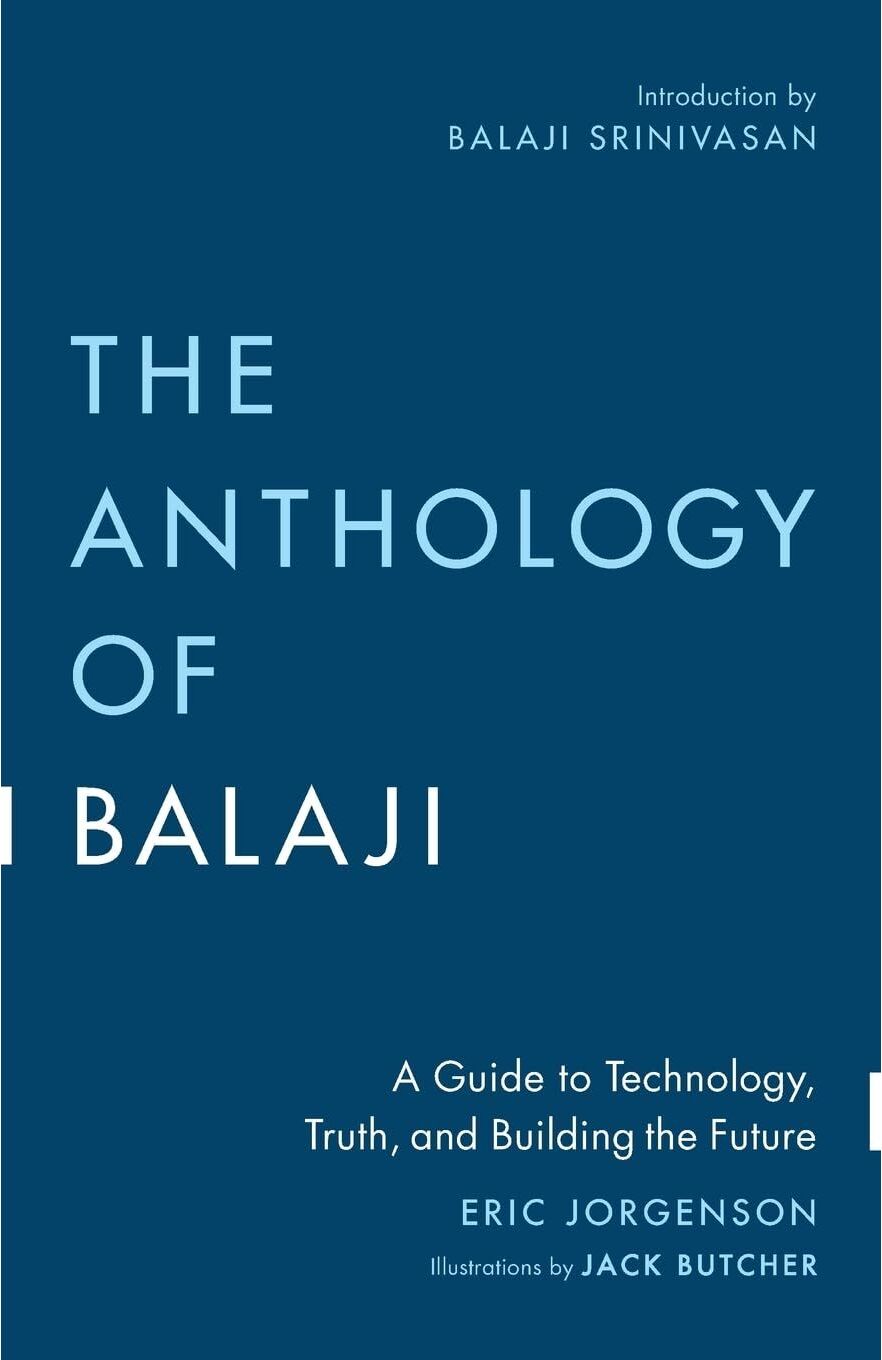
Magrathea Publishing The Anthology of Balaji: A Guide to Technology, Truth, and Building the FutureHow do you thrive in an unknown future? When you can’t see past the world we have now, look to visionaries like Balaji Srinivasan. His ideas show us how to build a healthier, brighter, and more technologically-advanced humanity. In The Anthology of Balaji: A Guide to Technology, Truth, and Building the Future, Eric Jorgenson curates a collection of Balaji’s wisdom from his entire career. In “Technology” you will see how technology shapes our world today and the ways it could shape our future. In “Truth” you learn how to think for yourself through the constant clamor of information and media. Finally, in “Building the Future,” you will learn how to wield Technology and Truth to change your life, change your community, and—maybe—change the future of our species. This guide will help you pick the next great investment, start a billion-dollar company, or even a new country. The Anthology of Balaji helps you visualize and build your brightest future.5,95 £*Shipping: 2,99 £Secure redirect to the provider
-
Uplift Essentials Armband Heart Rate Monitor With Bluetooth 5.0 And ANT+ Connectivity Armband Heart Rate Monitor With Bluetooth 5.0 And ANT+ ConnectivityTrain smarter and safer with this armband heart rate monitor featuring accurate optical HR tracking, calorie burn monitoring, and heart rate zone feedback. Designed for fitness enthusiasts, cyclists, and athletes, this device connects seamlessly to...126,97 $*Shipping: 0,00 $Secure redirect to the provider
-
HARPERCOLLINS Creative Confidence by Tom & David Kelley – Unleashing Your Creative Potential & Innovation MindsetA powerful and inspiring book from the founders of IDEO, the award-winning design firm, on unleashing the creativity that lies within each and every one of us. Too often, companies and individuals assume that creativity and innovation are the domain of the ‘creative types’. But two of the foremost experts in innovation, design and creativity on the planet show us that each and every one of us is creative. In an entertaining and inspiring narrative that draws on countless stories from their work at IDEO, and with many of the world's top companies and design firms, David and Tom Kelley identify the principles and strategies that will allow us to tap into our creative potential in our work lives, and in our personal lives, allow us to think outside the box in terms of how we approach and solve problems. ‘Creative Confidence’ is a book that will help each of us be more productive and successful in our lives and in our careers.4,95 £*Shipping: 1,99 £Secure redirect to the provider
-
What does rationalism mean?
Rationalism is a philosophical belief that emphasizes the role of reason and logic in understanding the world. It holds that knowledge is primarily derived from reason and intellectual processes, rather than from sensory experience or religious faith. Rationalists believe that certain truths can be known a priori, or independently of experience, through the use of reason. This approach to knowledge contrasts with empiricism, which emphasizes the importance of sensory experience in acquiring knowledge. **
-
What is critical rationalism?
Critical rationalism is a philosophical approach that emphasizes the importance of critical thinking and skepticism in the pursuit of knowledge. It was developed by philosopher Karl Popper and is based on the idea that knowledge can never be fully justified or proven, but can only be tested and criticized. Critical rationalism encourages the constant questioning and testing of theories and beliefs, and rejects the notion of absolute truth. It also emphasizes the importance of openness to new ideas and the willingness to revise or abandon theories in the face of new evidence. **
-
What is critical rationalism 2?
Critical rationalism 2 is an extension of the original critical rationalism philosophy developed by Karl Popper. It emphasizes the importance of critical thinking and skepticism in the pursuit of knowledge. This approach encourages individuals to actively seek out and challenge their own beliefs and assumptions, as well as those of others, in order to continually refine and improve their understanding of the world. Critical rationalism 2 also emphasizes the role of conjectures and refutations in the development of knowledge, and the recognition that all knowledge is fallible and subject to revision in light of new evidence. **
-
Would you prefer rationalism or empiricism?
As an AI language model, I do not have personal preferences. However, both rationalism and empiricism have their strengths and weaknesses. Rationalism emphasizes the role of reason and innate ideas in acquiring knowledge, while empiricism focuses on the importance of sensory experience and observation. Both approaches have contributed to our understanding of the world, and a balanced approach that incorporates elements of both rationalism and empiricism may be the most effective way to gain knowledge and understanding. **
Similar search terms for Rationalism
-
Yealink MeetingBoard 65-inch 4K Interactive Collaboration Display (MB65-A001)Yealink MeetingBoard 65 (MB65-A001): a 65-inch 4K Ultra HD LED-backlit interactive touch display for meeting rooms, with built-in camera, microphone array and speakers for Microsoft Teams Rooms and Zoom Rooms. Runs Android with a built-in processor and Wi-Fi.3896,99 £*Shipping: 0,00 £Secure redirect to the provider
-
Dell Pro Silent Wired Collaboration Keyboard KB525C UK QWERTY - BlackProfessional wired collaboration keyboard featuring spill-resistant design and silent key switches. Includes 15 programmable shortcut keys, dedicated Copilot key, and volume controls for enhanced productivity. Full numeric keypad and UK QWERTY layout with comprehensive 3-year NBD Advance Exchange support.45,99 £*Shipping: 0,00 £Secure redirect to the provider
-
Ring Battery Video Doorbell Pro – Advanced Home Security & Connectivity, NewUpgrade your home security with the Ring Battery Video Doorbell Pro – Wireless Video Doorbell Security Camera . Designed to give you peace of mind, it delivers a head-to-toe 1536p HD view so you can see every detail clearly, from visitors to parcels at your doorstep. With advanced 3D Motion Detection and Bird’s Eye View , you’ll always know what’s happening around your home. The built-in colour night vision ensures crisp images even in the dark, while the wire-free battery design makes installation simple and flexible. Stay connected anywhere with instant notifications, two-way talk, and full integration with the Ring app, Alexa devices, and more. ✔️ Wireless video doorbell – Easy to install with a rechargeable battery, no wiring needed ✔️ 1536p HD head-to-toe view – See visitors and packages clearly in high definition ✔️ 3D Motion Detection & Bird’s Eye View – Advanced alerts and aerial perspective for extra security ✔️ Colour night vision – Crystal-clear video even in low light or darkness ✔️ Two-way talk with noise cancellation – Hear and speak to visitors in real time ✔️ Customisable motion zones – Focus on the areas that matter most ✔️ Smart alerts & notifications – Instant updates on your phone via the Ring app ✔️ Alexa compatible – Works seamlessly with Echo devices for hands-free monitoring ✔️ Quick-release battery pack – Easy to recharge and swap for uninterrupted security ✔️ Durable design – Built to withstand outdoor weather conditions The Ring Battery Video Doorbell Pro combines advanced motion detection, high-definition video, and smart home integration in one sleek device. Perfect for enhancing your home security, it ensures you never miss a visitor or delivery, day or night.174,49 £*Shipping: 0,00 £Secure redirect to the provider
-
Holmegaard Future Tumbler, Clear, 4 pcs. - 12.5 ozPeter Svarrer's large tumblers in the Future range are both capacious and comfortable to hold. The glass, which has a volume of 12.5 oz, is ideal for everything from a cold beer or a long drink to colorful smoothies.41,49 $*Shipping: 0,00 $Secure redirect to the provider
-
How did Kant unite empiricism and rationalism?
Kant united empiricism and rationalism by proposing that both are necessary for a complete understanding of the world. He argued that our knowledge begins with sensory experience (empiricism), but it is then shaped and organized by our innate mental structures and concepts (rationalism). According to Kant, our minds actively construct our experience of the world by organizing sensory data according to certain a priori categories, such as space, time, and causality. This synthesis of empirical data and rational concepts allows us to have a more comprehensive understanding of the world. **
-
What is the difference between rationalism and empiricism?
Rationalism is the belief that knowledge is primarily derived from reason and innate ideas, while empiricism is the belief that knowledge is primarily derived from sensory experience and observation. Rationalists argue that certain truths can be known a priori, or independent of experience, while empiricists argue that all knowledge comes from a posteriori, or through experience. In essence, rationalism emphasizes the role of reason and deduction in acquiring knowledge, while empiricism emphasizes the role of observation and experimentation. **
-
What is the difference between empiricism and rationalism?
Empiricism is the belief that knowledge comes primarily from sensory experience and observation of the external world. Rationalism, on the other hand, is the belief that knowledge comes primarily from reason and logic. Empiricists rely on evidence and experimentation to support their beliefs, while rationalists prioritize deductive reasoning and innate ideas. In essence, empiricism emphasizes the importance of experience, while rationalism emphasizes the importance of reason. **
-
What is your opinion on René Descartes' rationalism?
I believe that René Descartes' rationalism is a valuable philosophical approach that emphasizes the power of human reason and logic in understanding the world. Descartes' method of doubt and his famous statement "I think, therefore I am" laid the foundation for modern philosophy and the scientific method. While some may criticize his reliance on reason over sensory experience, I think Descartes' rationalism has greatly contributed to the development of critical thinking and skepticism in philosophical inquiry. **
* All prices are inclusive of VAT and, if applicable, plus shipping costs. The offer information is based on the details provided by the respective shop and is updated through automated processes. Real-time updates do not occur, so deviations can occur in individual cases. ** Note: Parts of this content were created by AI.